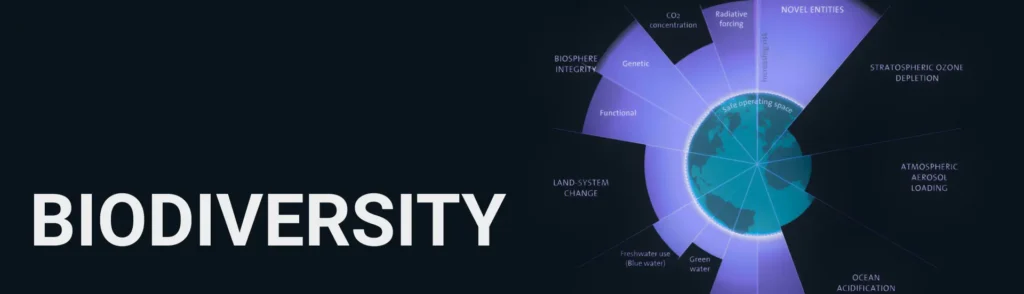
Agriculture sits at the fault line of planetary boundaries.
Farmland is where biodiversity loss, land use change, and carbon emissions converge. It is a pressure point. Yet, because of its scale, it is also one of the greatest levers for restoration. Agricultural land is both a challenge and a powerful opportunity to create biodiversity buffers and regenerate ecosystems from within supply chains.
Farming is not separate from nature. It is rooted in soil, water, climate, and living systems. Production does not stand outside these forces; it emerges from them.
Modern intensive agriculture treats production as an equation: inputs in, outputs out. Control the inputs, control the yield. This view ignores the living foundation of productivity. Soil fertility is generated by roots, microorganisms, and nutrient cycles working together. When these biological relationships are weakened, productivity becomes dependent on external substitutes.
There is urgency in shifting course. Agriculture must recognise how deeply it depends on biodiversity and natural processes, and begin to work with them rather than override them.
Regenerative agriculture offers a holistic, place-based, practical pathway. Rather than imposing a fixed system, it reads the context, follows natural flows and patterns, and treats food production as the living, evolving process it truly is. This way of seeing agriculture naturally leads to a set of guiding principles — ones that prioritise relationship over extraction, offering a shared direction: toward healthier soils, richer ecosystems, and farming systems that can truly last.
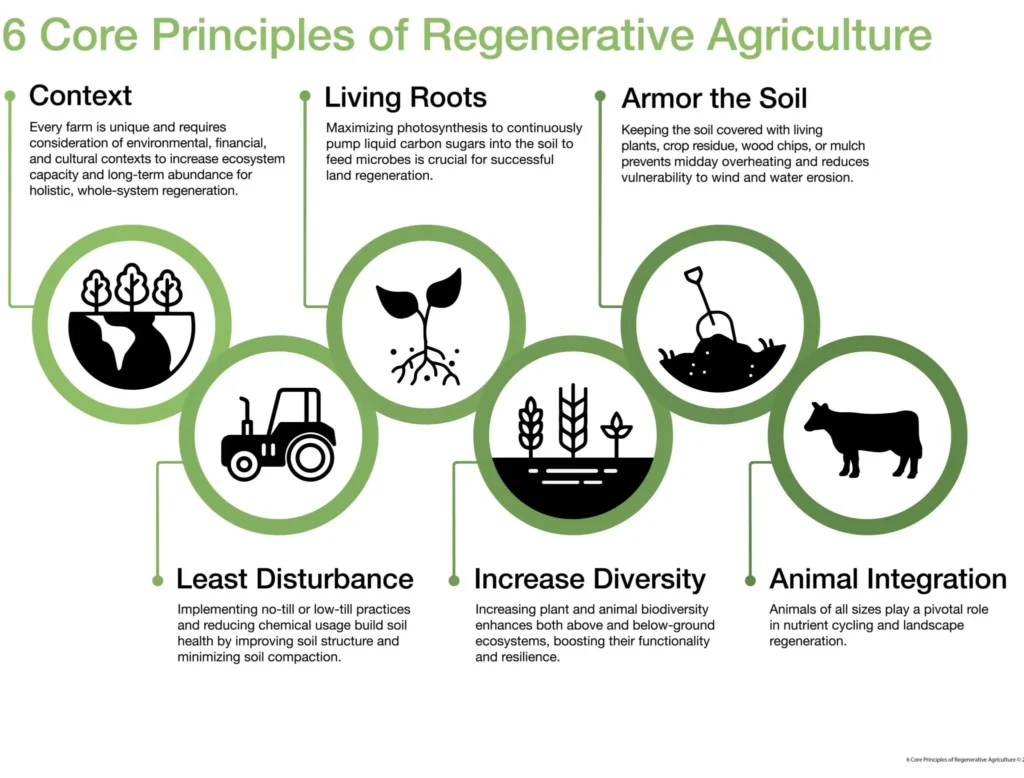
By diversifying crops and land use, it creates habitats for birds, insects, and small mammals, strengthening ecosystem resilience. Functional biodiversity reduces the need for chemical plant protection by restoring natural balance.
Continuous root growth and living ground cover feed soil life through root exudates (root glucose based production that enables plant communication with the rhizosphere), activating microbial communities. Healthy microbiomes build fertile soils. Fertile soils produce nutritious crops. Above- and below-ground biodiversity reinforce each other in a self-sustaining cycle.
Our team has the chance to continuously participate in the construction of regenerative projects, through contextual building of GaiaLabs and learning opportunities such as Phillipe Birkin’s workshop at the Herdade no Tempo.
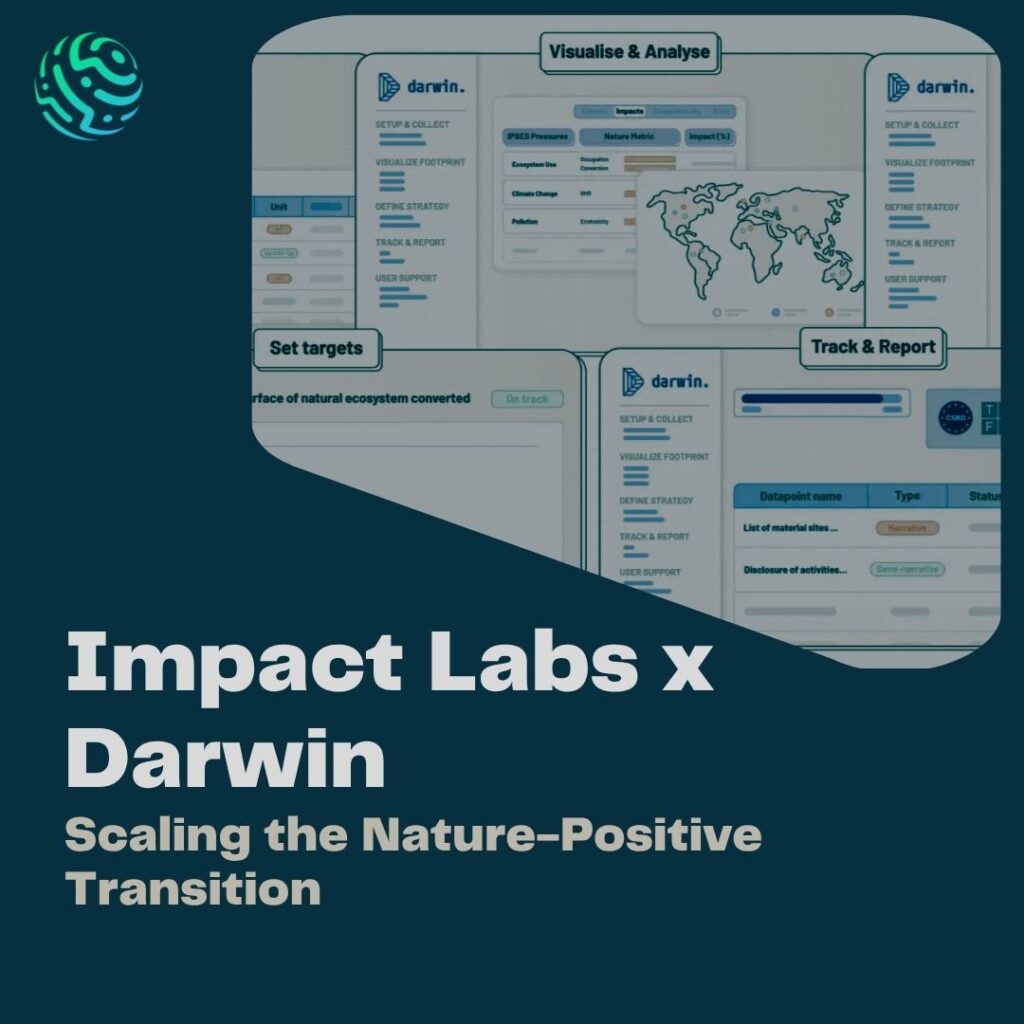
At Impact Labs, we work with this reality, supporting companies in transforming their supply chains to reconnect agricultural production with biodiversity flows and strengthen resilience from the first mile.
Impact without measurement is intention and our MRV framework gives regenerative commitments a rigorous, transparent backbone.