Make your value chain more resilient. Engage with your upstream stakeholders to protect and regenerate Nature.
Make your value chain more resilient and engage with your upstream stakeholders to protect and regenerate Nature.
Ecological Transition Strategy
How do you reduce the negative impacts and create positive ones to anticipate risks, opportunities and challenges?
ASSESS & AVOID
Map company initiatives & benchmark competitors
Assess trends (scientific, consumers) to create prospective scenarios
REDUCE
Upstream value chain engagement
Purchase better, collaborate, integrate
REGENERATE
Value chain restoration (insetting)
Beyond value chain mitigation
Neutralization
Impact Measurement
How to automate and integrate a precise quantification of impact on planetary boundaries throughout the organisation?
IMPACT MODELING
Data collection automation
Fill data gaps via modeling
Impact dashboard design
TECH SCOUTING
Nature Tech selection
Supply chain transparency
Internal team upskilling
NATURE REPORTING
Voluntary frameworks and claims support (SBTN, TNFD, CSRD)
Impact report design
The Impact term is marking the third stage of Sustainable Business Development that started in the 80’s with “CSR” (Corporate Social Responsibility) that was aiming at decreasing the negative impact of Business by investing a minimal part of revenues in external entities (such as NGOs) to maintain a good reputation. Around 2000’s, “Sustainability” emerged to rethink longevity of the Business, by considering the negative effects along its Supply Chain. It gave birth to more Responsible Procurement, more robust Public Reporting… but without truly reconsidering the business model.
We consider 2020 is the start of the Impact era: Sustainable Business Transformation realized with measured significant Positive Impact, which is to consider the full costs of doing Business, integrating the Social & Environmental impacts of operations across the Supply Chain, ultimately creating Stakeholder Value with all its value chain partners. It will necessarily reshape business models for more circularity, or even become more regenerative.
We believe that Triple Impact & “Triple Bottom Line accounting” can only happen if the Enterprise Purpose is redefined.
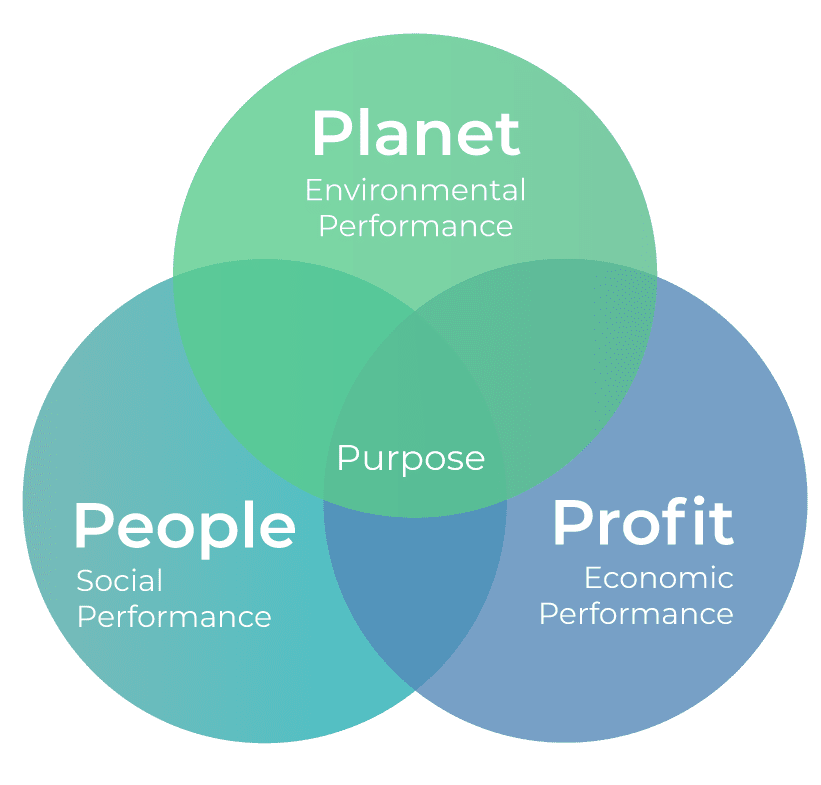
Purpose: what is the true Purpose of your Business? Does it bind your People, unleash energies, and create a Competitive advantage?
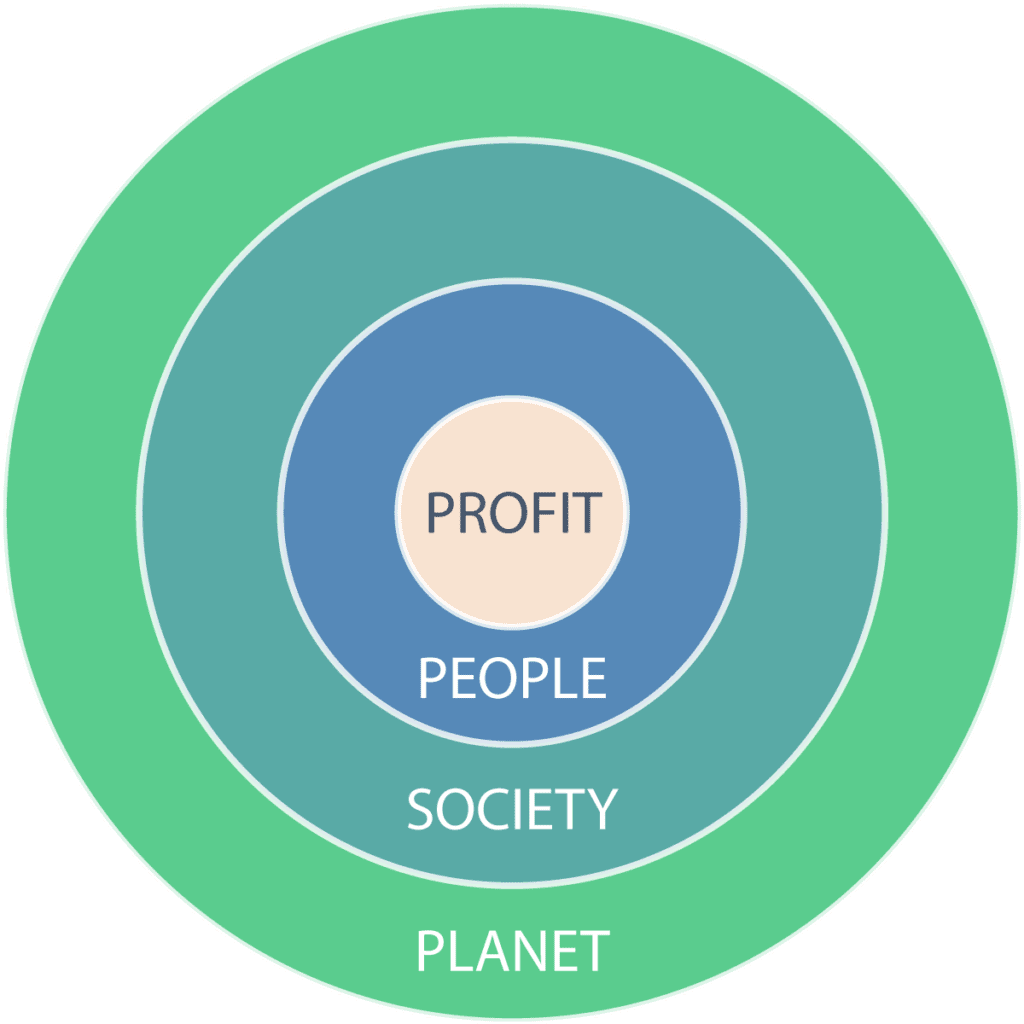
Planet: our core focus – do you operate within planetary boundaries? For Climate Change and other boundaries your Industry is pushing? How do you Impact Biodiversity? What are the other negative externalities you didn’t account for? How to Reduce those, and mitigate what is left?
People & Society: how is Value shared with your Stakeholders? From your Employees to your Suppliers & Customers? Do you create Societal benefits for a common Good?
Profits: what is a sustainable level of Profits? What do you do with your Profits? How do your share value beyond your Shareholders?
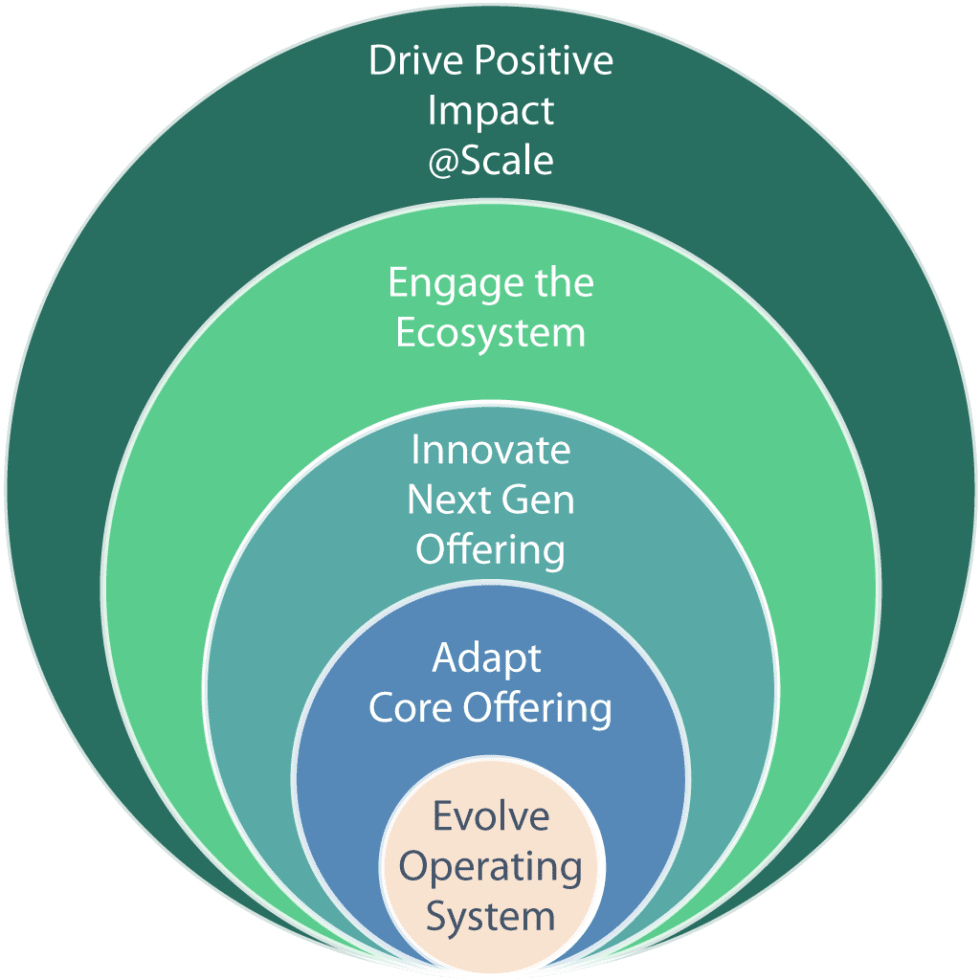
1. Evolve your Operating System: Start by changing the way you conduct business: from employee commuting to energy, food and travel policy, embark the whole company on personal commitments to “walk to talk”, from top-to-bottom.
2. Adapt your Core: Understand the Life Cycle Assessment and impact of your Business As Usual. Change your existing product and services with measurable improvements in absolute terms (that includes your growth).
3. Innovate the next generation of Products & Services: Engineer new products & services that have a significant impact vs. your core offering. It requires re-engineering and new eco-design capabilities to achieve reduction of inputs with similar outputs (if they are all really needed).
4. Engage your entire Ecosystem: Partner with your Upstream suppliers to share the efforts to reach your impact targets. Engage your customers and consumers to also take part of the journey Set up open and eco-systemic innovation that optimize the impact across your value chain, with the help of digital technologies when required.
5. Drive Positive Impact @ Scale: Ultimately, understand where your supply chain originates, always tapping into natural resources with negative impacts, often linked to Human suffering, and after strict diminution of those, engage the journey to drive Positive Impact and Regenerate Planet Earth. Through your direct Supply Chain; or by investing in other mitigation or avoidance efforts
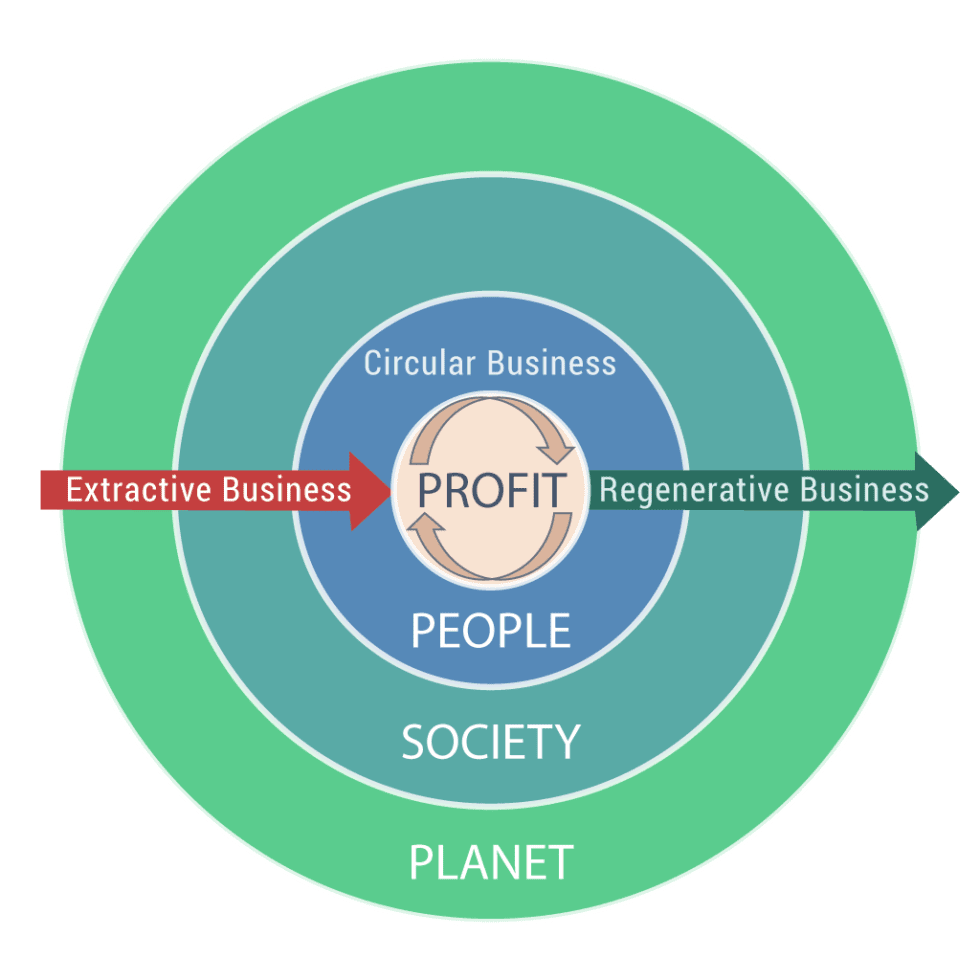
Following this path, business will transition from an extractive business model to new business models with more Circularity, more Frugality (reduction of Physical Inputs and Energy), and ultimately to a Regenerative Business Model that regenerates Nature and Life, and shares value with all stakeholders.
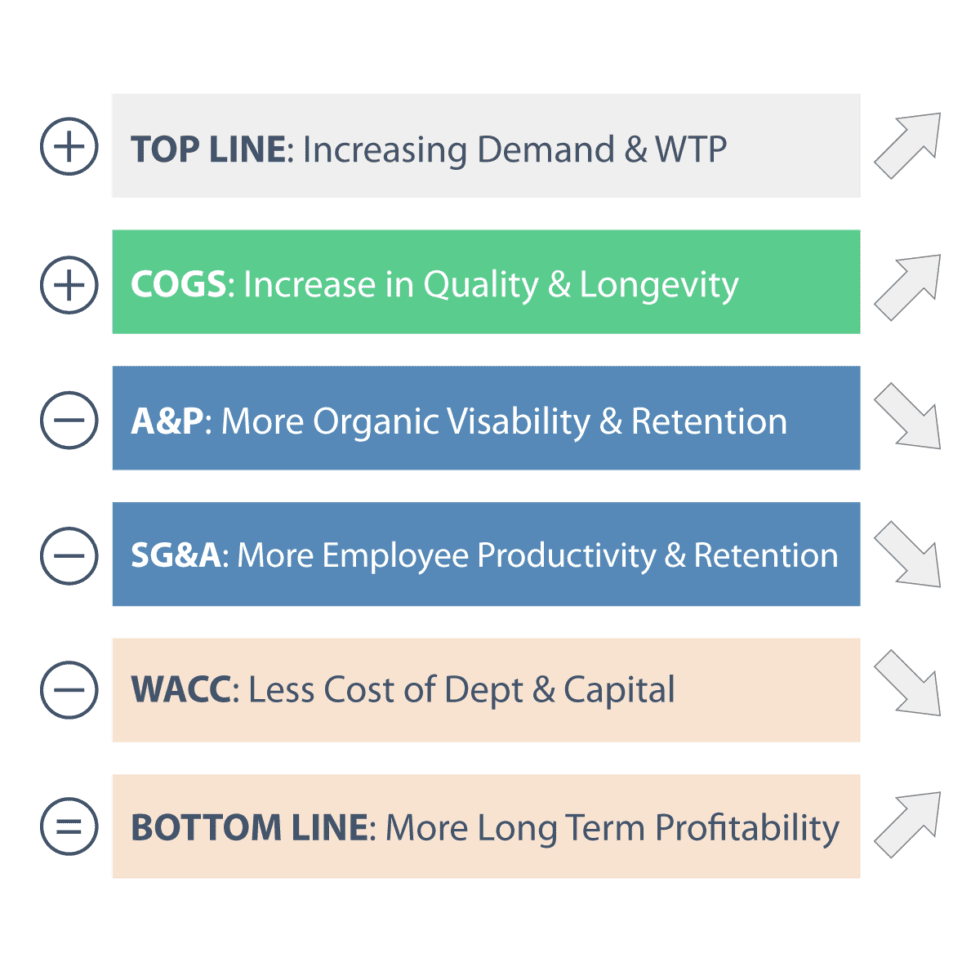
Such an Impact-Driven Business approach allows for building sustainable profits and resilience by understanding how Sustainability Investments impact your P&L:
This is the path to long term competitive advantage and shared Value Creation.
After this process, you will be in full capacity to drive the transformation until completion.