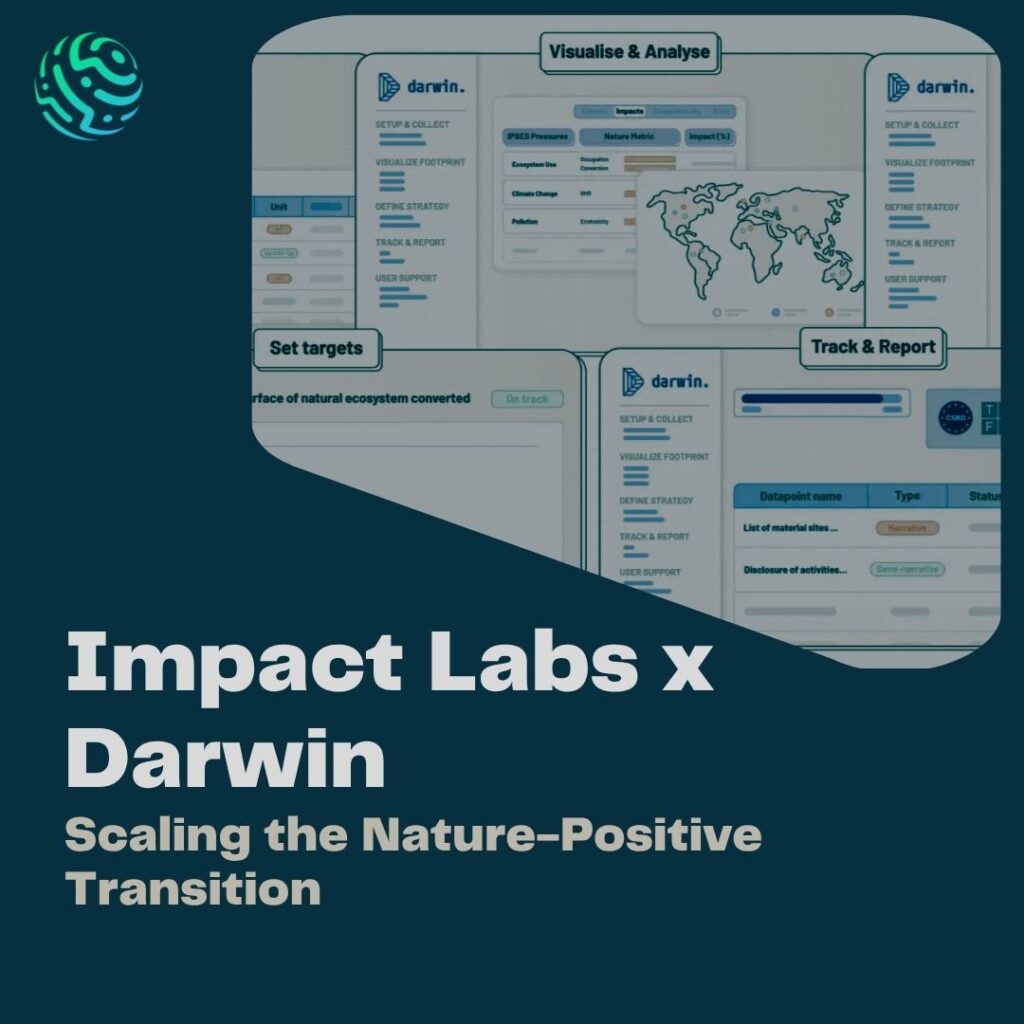
The process starts with mapping all entities related to the organisation, and associating to them the datapoints necessary to analyse the impact on biodiversity. There are several possible data sources — e.g. financial, commodities/product and pressure — which should be combined with the entities’ location to better assess how the company affects local environmental pressures and its proximity to high-risk/sensitivity areas.
Then, the platform will convert this data into both pressure metrics, related to the five drivers of biodiversity loss, and a unified score of biodiversity impact using relevant models and datasets. With this information, it is possible to identify the most significant impacts of the organisation’s operation, its net/avoided impact and other relevant outputs that are particular to the scope of each assessment.
ESG due diligence methodologies have rightfully become indispensable for investors, helping them not only mitigate risks, but also preserve and enhance deal value. As dealmakers have difficulty quantifying ESG’s impacts, sustainability specialists can help by enhancing resource allocation and improving the quality and precision of due diligence, allowing them to get tailored insights that facilitate decision-making processes.
In 2024, a group of major French institutional investors launched “Objectif Biodiversité”*, a fund dedicated to financing companies that provide concrete solutions for the preservation and restoration of ecosystems.
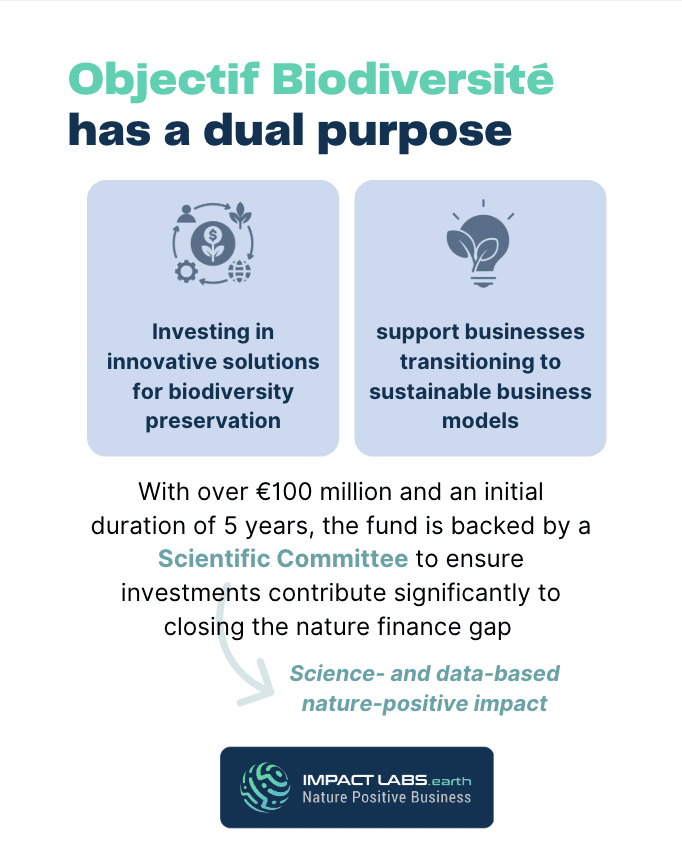
Impact Labs has contributed to guaranteeing a rigorous approach with an additional layer of independent assessment with our due diligence methodology, which:
- Qualifies and quantifies biodiversity impact.
- Provides a consistent and comparable view of a companies sustainability performance that can be mapped to an investors’ portfolio risk framework;
- Aligns with EU regulations and leading standards, facilitating compliance and reporting for the investors under the SFDR, EU Taxonomy or CSRD;
- Results in impact qualification grounded on globally recognised frameworks and databases, complemented with company and industry knowledge to capture context-specific nuances.
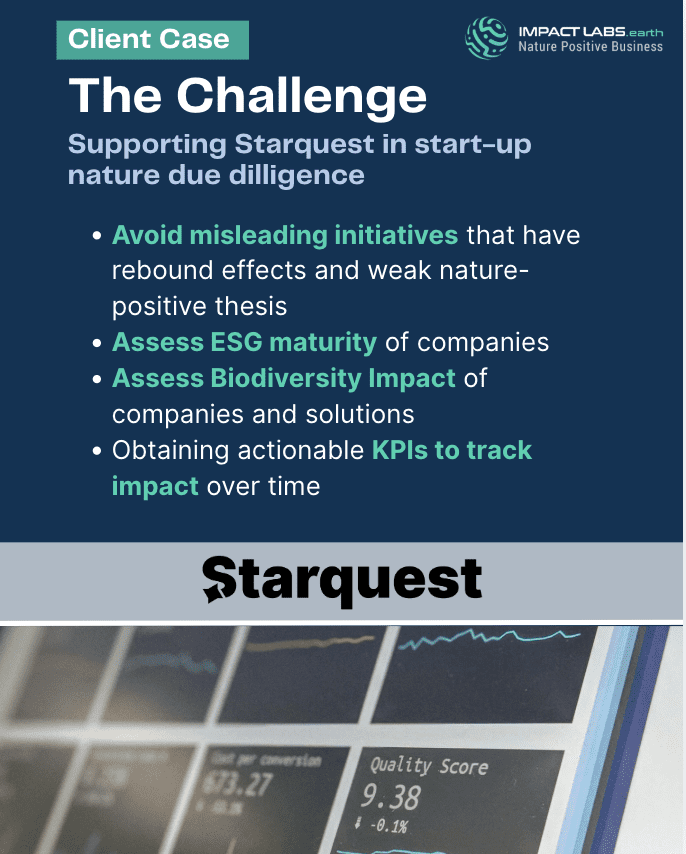
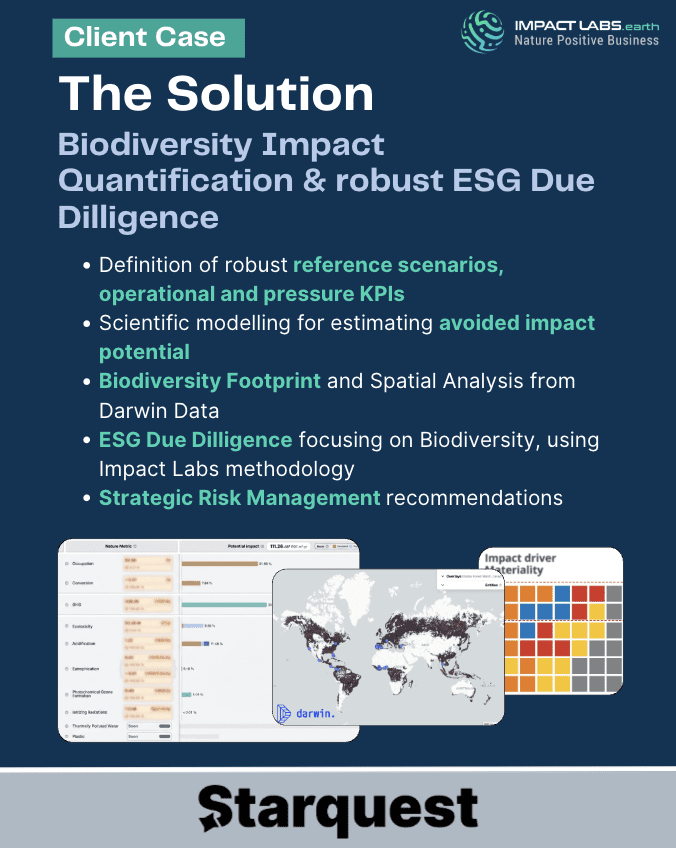
Our process is rooted in strong sustainability and data expertise to assess key points and answer key questions:
- Biodiversity Impact: What is the company’s biodiversity impact?
- ESG and Mission Purpose Maturity: How robust is the company’s ESG impact management and mission purpose?
- ESG Materiality: What are the company’s material topics and what are the associated risks?
- Strategic Risk Management and Impact Plan: How can the company manage the identified risks in an actionable way during the investment period?
Ultimately, our due diligence process helps to identify value-creation opportunities and guarantee tangible nature-positive results. The influence and adoption of ESG factors on due diligence processes is not yet uniform, however Europe is at the forefront and we are confident these processes can promote not only better financial performance, but also better sustainability performance, for people and the planet.
*The French institutional investors behind the “Objectif Biodiversité” (Biodiversity Objective) initiative, launched in 2024 with Af2i – Abeille Assurances (Aéma Groupe), BNP Paribas Cardif, BPCE Assurances, Caisse des Dépôts, CNP Assurances, EDF Gestion, MAIF, MACIF (Aéma Groupe), Malakoff Humanis, Société Générale Assurances, Crédit Agricole Assurances, AXA, Allianz France, AÉSIO mutuelle (Aéma Groupe), PRO BTP, and CARAC – now joined by Caisse Générale de Prévoyance des Caisses d’Épargne (CGP), announce the selection of Starquest-Montefiore as the manager for the unlisted fund.
References
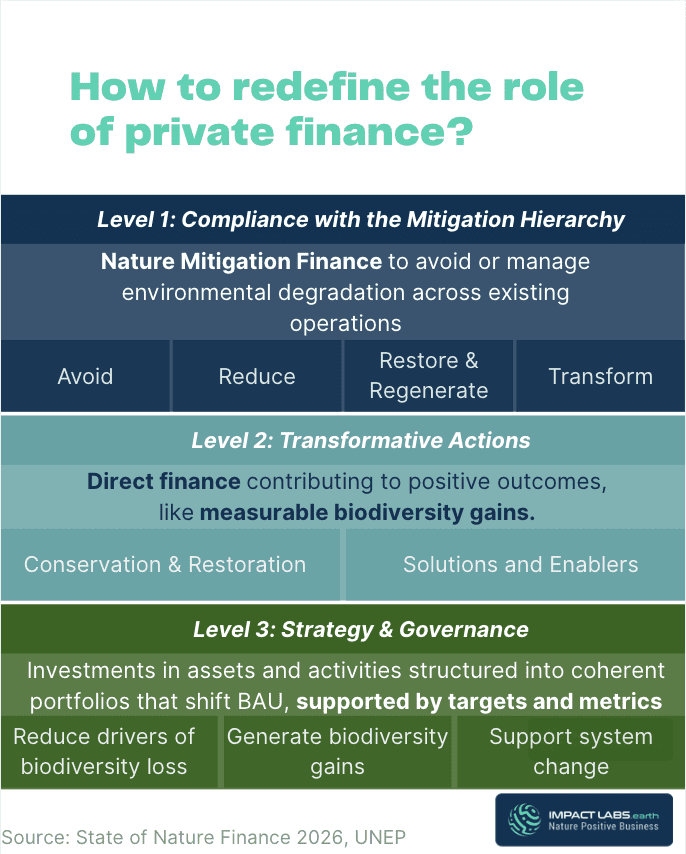
State of Nature Finance (2026), UNEP