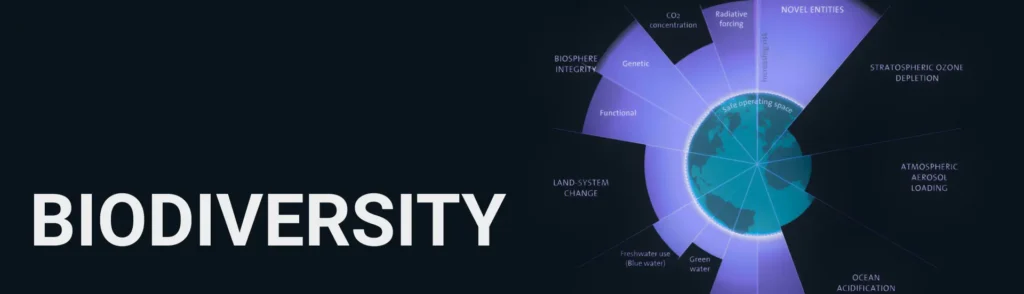
As previously mentioned, there is strong case for companies to go beyond GHG emissions, especially when assessing their environmental impacts. Without accounting for broader elements, such as land use changes and water consumption, these assessments become limited — restricting the capacity to further understand the nature-related risks, dependencies and opportunities.
Impact Labs and its technology partner Darwin Data are implementing a methodology to measure biodiversity impact with rigour and transparency. Darwin’s platform combines advanced technologies with impact and lifecycle databases to scale nature strategies – including biodiversity footprinting, risk assessments, spatial analysis and reporting.
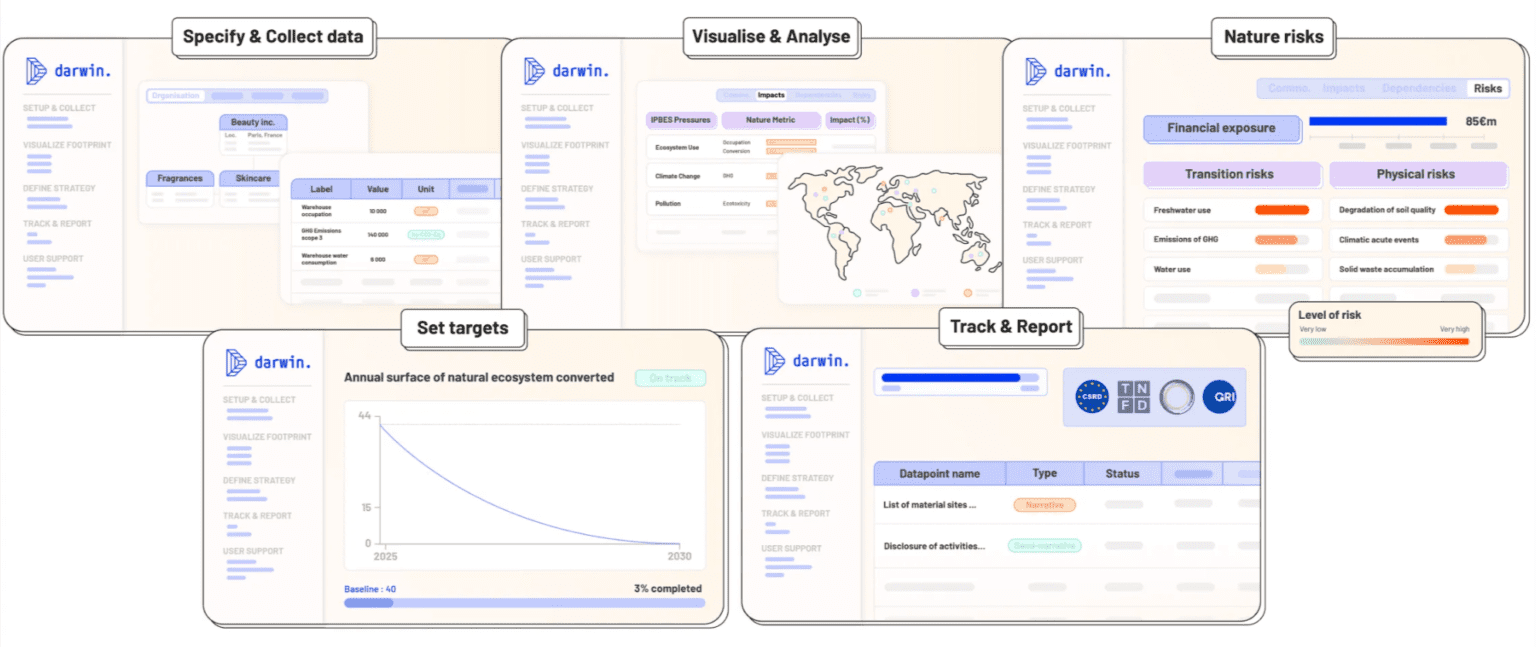
The process starts with mapping all entities related to the organisation, and associating to them the datapoints necessary to analyse the impact on biodiversity. There are several possible data sources — e.g. financial, commodities/product and pressure — which should be combined with the entities’ location to better assess how the company affects local environmental pressures and its proximity to high-risk/sensitivity areas.
Then, the platform will convert this data into both pressure metrics, related to the five drivers of biodiversity loss, and a unified score of biodiversity impact using relevant models and datasets. With this information, it is possible to identify the most significant impacts of the organisation’s operation, its net/avoided impact and other relevant outputs that are particular to the scope of each assessment.