Implementing Digital Technologies that enable to tackle Scope 3 Downstream Emissions with the empowerment of the end consumer to take is share of the emissions reduction.
#Sustainability #Impact Analytics #Digitalization
INDUSTRY
Cosmetics
CLIENTS
2 Billions Consumers WW
LOCATION
Everywhere
Client
L’Oréal is the global leader in Cosmetics, a leader in Digital Transformation, and a strong mover in Sustainability, with many initiatives to tackle its environmental footprint, starting with Carbon emissions, with many recognitions of its commitments regarding Scope 1 and 2, and serious moves to tackle scope 3 that represent more than 90% of the total.
Garnier is the Group’s Brand with the most ambitions to transform its Business Model, having the most important Carbon footprint of all Cosmetics Categories (Hair Care), mostly because of the Scope 3 Downstream Emissions in the end of the Consumer.
From Strategy definition to UX (user experience design) and Technology Integration, we supported the Eco-Design of a Technology Solution that would allow rapid prototyping to deployment at scale.
Transformation Mission
#Sustainability
Engagement of the End Consumer
The use of shampoo in the hand of the end Consumer equates to more than 60% of the total Carbon footprint of the Hair Care category, the highest in Cosmetics.
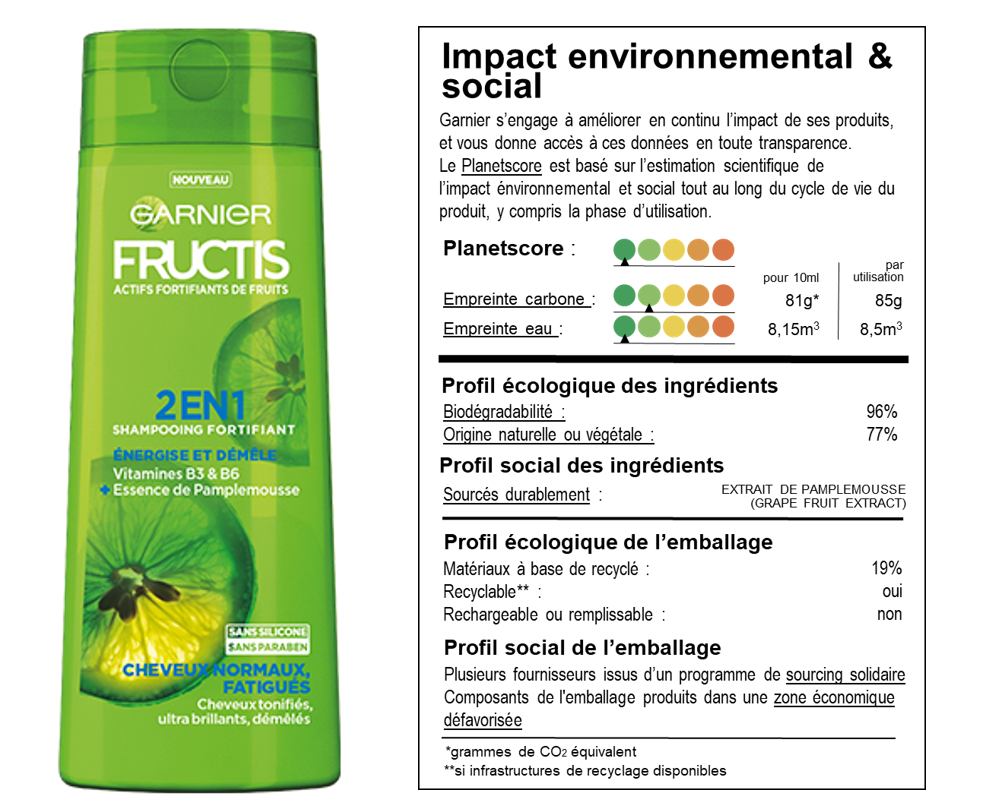
Together with 11 independent environmental experts, L’Oréal group has developed the very first independent Environmental Labeling program, with Garnier has the first pilot Brand to test it on the Market, with the ambition to educate consumers in choosing transparently the products with least Impact in the Garnier range (with a Transition plan to move most products in the best ratings within a few years – L’Oréal Group contribution), but also to make them understand how they can contribute to the Scope 3 reduction effort, by making a responsible usage of the product
Since that program, Garnier accelerated its Transition by transferring a large portion of the Hair Care business into Dry products that significantly improve the Carbon, Plastic & Water footprint of products.
#Impact Analytics
Simple Consumer Information & Education
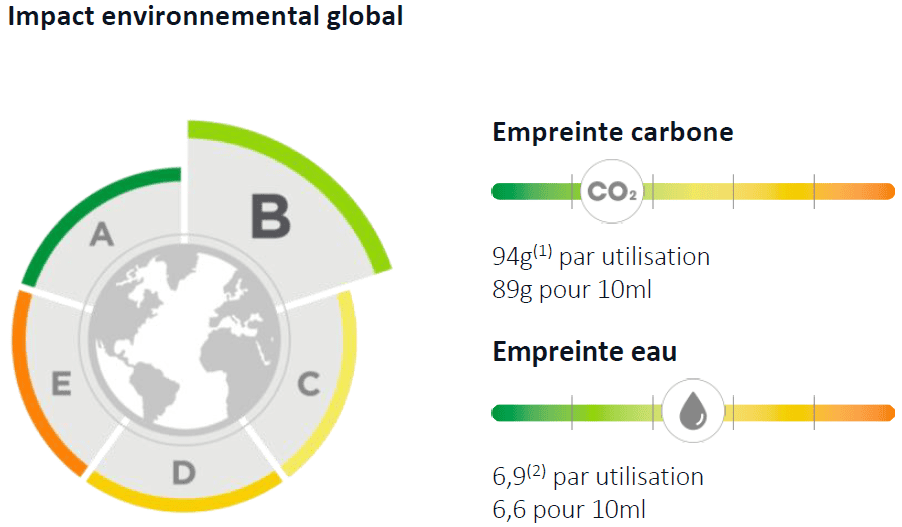
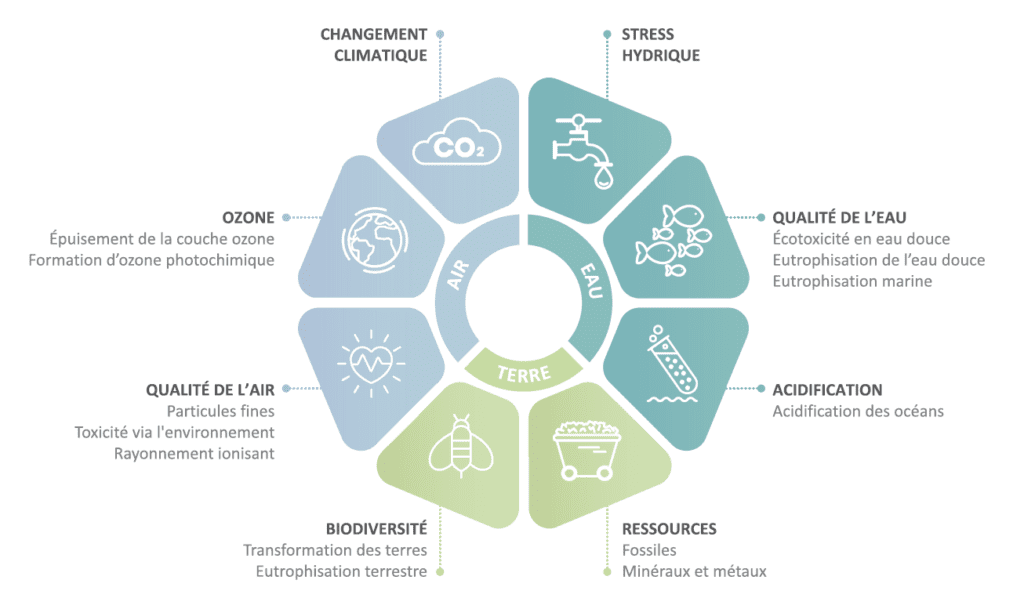
With complex 8 dimensions full Life Cycle Assessment of the Brand key products, the challenge was to make the information accessible to the end Consumer, enabling simple decision in the purchase process, both in Store and Online, by providing key information.
Inspired by the Nutri-Score that exist since 2017 in Food, with a simple A B C D E rating and display, L’Oréal engineering a simple system that could apply for every Brand and Category, with a focus on Carbon & Water footprint, with a simple scale & color system to let the consumer compare products in full transparency.After some testing, this system has been rolled-out to the whole range and many other Brand, and will certainly become the standard for the Industry.
#Digitalization
Design of Front-end UX at Scale
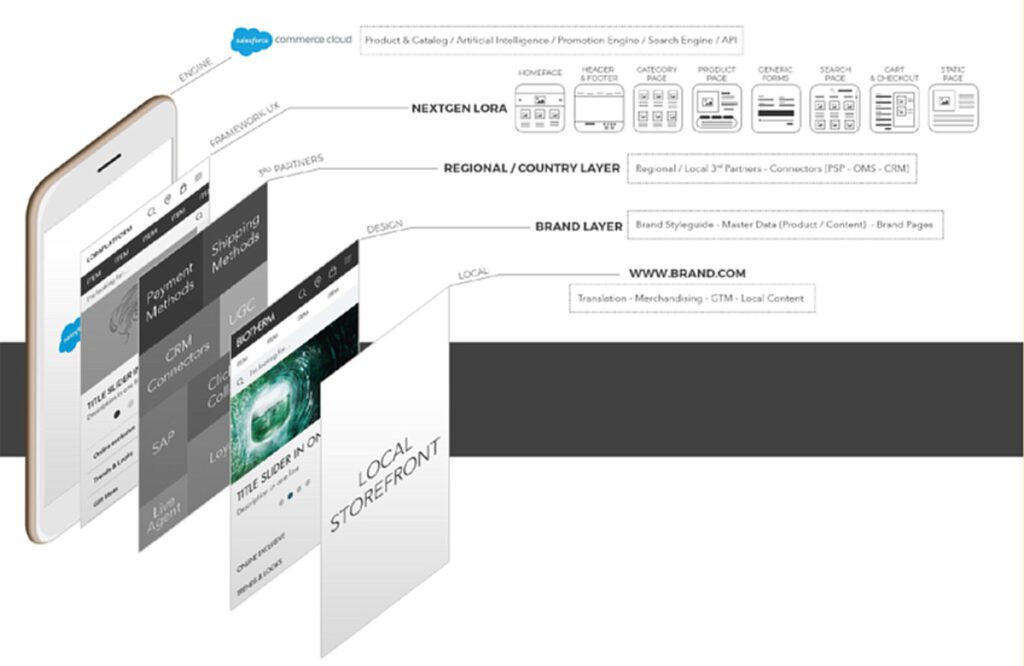
Based on selected & tested Consumer Experience, we designed the “atomic design system” envision several potential creation, adaptation, enhancement of website pages & services to serve Sustainability needs for all Brands & Geographies
Minor Adaptation of existing pages (new content order based on context…)
Re-templating of keypages (based on company’s front-end systems: SiteCore & Demandware Reference Applications)
New independent Components creation & integration within existing pages (PIL module for instance)
Impact
Supporting Garnier ambitions to become the most Sustainable Mass Haircare Brand
Garnier has the ambition to become a transparent leader in responsible Hair Care, with disclosure of its Environmental & Social Impacts at product level, with an active Transition to lower Carbon & Water products.
Edenly is an e-commerce retailer of jewelry based in Switzerland, since its creation 15 years ago, Edenly’s mission has been to offer the best in jewelry, at affordable prices. Now, Edenly is boosting its sustainability commitment.
This FMCG company wants to gain insight into the environmental impact of its operations, a first step in a data-driven sustainability transformation.
INDUSTRY
Jewelry
CLIENTS
Consumers
LOCATION
HQ in Switzerland
Transformation Mission
Vision: (Re)defining a sustainability purpose
When working with clients that specialize in the retail of fast-moving consumer goods (FMCG) we want to make sure that they understand the sustainability vision of Impact Labs, and of those that support a sustainability transformation in business. To do this we need good quality data that can support the decisions that ultimately will lead first to Net Zero, and subsequently to Net Positive Impact.
Edenly started a mission of solidifying the sustainability values and motivations of the company’s C-level executives and to make sure that our vision was aligned, Impact Labs conducted a seminar with all of the team. The goal was to raise awareness about climate issues and identify ways to reduce impact and to invest in compensation strategies, in a collaborative way. In this seminar, an internal person in charge of environmental impact management was assigned and the carbon footprint of the company was also explored.
All this contributed to collectively re(define) a meaningful purpose for the company, including most stakeholders in the conversation and considering and to drive impact and value creation. Without a clear purpose, a sustainability strategy can end up having marginal effect and possibly lead to greenwashing, that why Impact Labs includes the Vision pillar in our root practices.
Vision: (Re)defining a sustainability purpose
360º Impact Analytics: Impact Quantification
360º Impact Analytics: Impact Quantification
When working with Edenly, Impact Labs conducted a Carbon Footprint of Edenly’s products with the goal of accurately assessing the impact of the products from the supplier to the consumers (excluding end of life).
Carbon footprint is one of the first steps in the process of data-driven sustainable transformation, where measurement is key. Obtaining impact KPIs related to the planetary boundaries adds value and enables decision making. Edenly’s started by measuring it’s GHG Emissions, considering it’s en e-commerce company.
This process involves the creation of conservative models to deal with the lack of reliable and consistent information in other steps of the supply chain.
Training for self-sufficiency was also a part of the process, by including Edenly’s responsible for environmental impact management and using the SAMI. SAMI is a platform-as-a-service company that provides a carbon footprint and reduction plan tool, simplifying the obtention of information for the carbon footprint and its’ calculation.
ustainability Engineering: Defining a sustainability strategy
Once again, precise impact measurement is the foundation of sustainable business transformation. That’s where sustainability engineering comes in, with environmental footprinting and devising reduction pathways.
Impact Labs analyzed the GHG Emission reduction potential and complexity of multiple reduction actions, in order to identify their priority within Edenly’s sustainability strategy. In this case, raw materials were one of the biggest contributors to the carbon footprint. In a jewelry company, tackling the source of the product involves investing in eco-systemic innovation in recycling or laboratory production of materials such as gold and silver.
Impact Labs also devised a sustainability communications guide, focusing on creating authentic engagement with stakeholders (customers and consumers).
ustainability Engineering: Defining a sustainability strategy
Impact: Initiating company-wide transformation
Using SAMI, a platform to measure you carbon footprint in a simplified and collaborative way, we were able to integrate the company in calculating their carbon footprint. All company employees were also part of a seminar and took part of a detailed explanation and visualization of the results. The carbon footprint was the first step Edenly took in their data-driven transformation, gaining insight into the impacts of their e-commerce business.
Evaluation of existing Sustainability initiatives & Path Design towards authentic consumer engagement
#Purpose #Sustainability #BusinessTransformation
Client
Amorino is a chain of ice-cream boutiques, operating on a franchise model across 18 countries, with Headquarters in France. Since its creation, Amorino maintains a dedication to producing artisanal gelato, based on the finest Italian recipes.
Amorino has a selection of carefully sourced ingredients, free of preservatives, artificial flavors and flavor enhancers. Amorino was awarded the Vegan Society’s seal of approval for its entire range of sorbets in 2016, and they have over 20 organic flavors, all ECOCERT certified.
INDUSTRY
Food
CLIENTS
Individuals
LOCATION
HQ in France
Transformation Mission
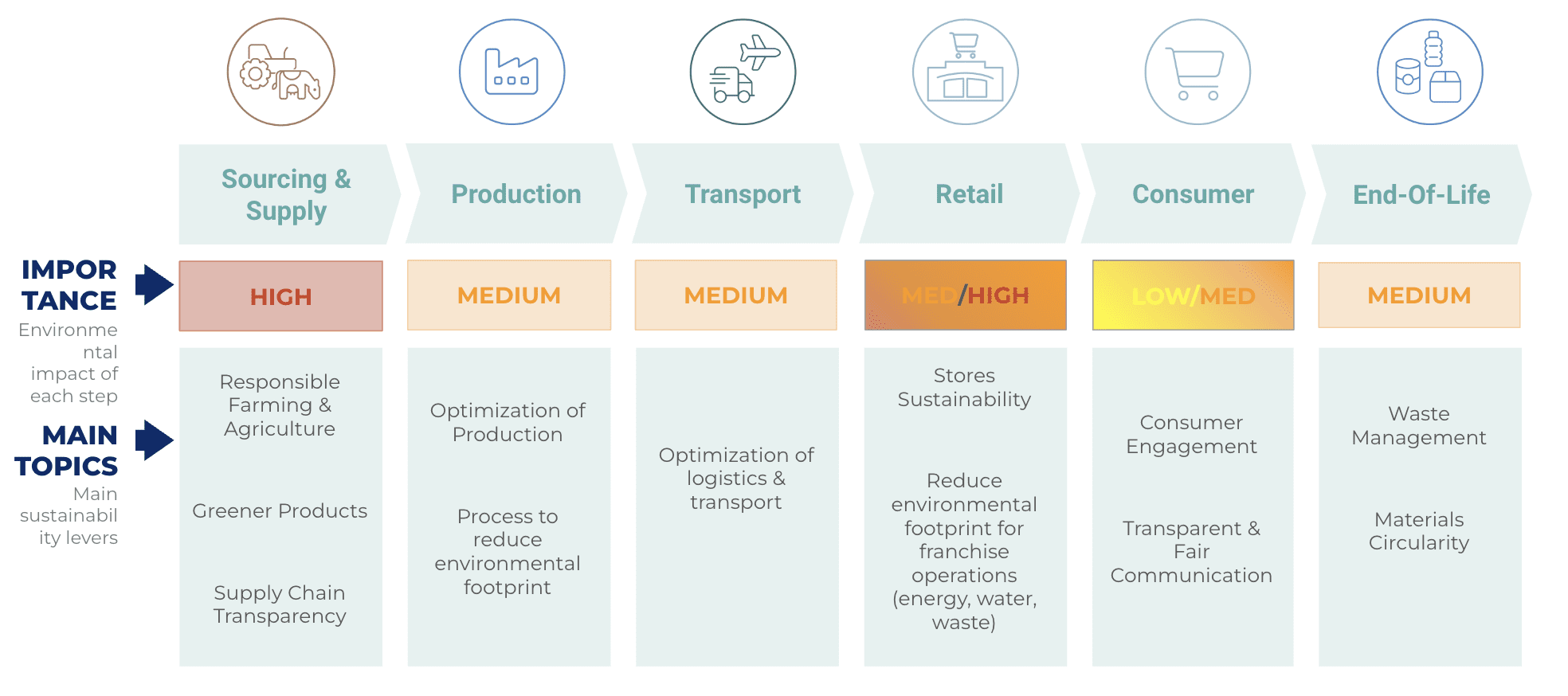
Vision: Understanding the environmental impact of the food value chain
To engage in sustainable transformation, there needs to be a deep understanding of Sustainability foundation concepts across all key company functions. To achieve this, building on Amorino’s previous steps in sustainability, we conducted awareness-raising workshops about the environmental impact of the food value chain. Providing background information on sectoral environmental impacts helps to strategize efficiently and to perform aware decision-making.To understand how the food sector is integrating sustainability practices, we also elaborated a market analysis and benchmark identifying the latest sustainability trends in the ice cream industry.
Vision: Understanding the environmental impact of the food value chain
In order to engage in a data-driven sustainability approach, we performed an audit of Amorino’s sustainability action plan assessed against an existing environmental footprinting. By assessing Amorino’s real impact and having a keen understanding of what has been done (scope and performance metrics), it was possible to craft a sustainability roadmap with better prioritization and more alignment with environmental impact data. This was accompanied by cost-benefit analysis to ascertain which solutions and actions were to be prioritized.
Business Transformation: Leveraging environmental insights for strategic marketing
The goal was to help Amorino integrate sustainability content in their dialogue with key stakeholders, namely consumers and employees, and to increase their already solid brand reputation on the market. The first priority was appealing to more eco-conscious customers and engaging all consumers with Amorino’s sustainability goals. For this, we crafted stakeholder engagement guidelines and communication recommendations, keeping in mind the European directives on Green Claims.
Business Transformation: Leveraging environmental insights for strategic marketing
Impact: Sustainability initiatives Assessment and Roadmapping towards a data-driven, holistic approach
As sustainability consultants, we aim to empower our clients to meet the evolving demands of a sustainable future. In this case, our ongoing collaboration with Ekimetrics, a global leader in data consultancy, showcases how we helped them build on their mission as a purpose-driven organization by embedding sustainability across their internal and client-facing activities.
This engagement represents the next chapter in our work with Ekimetrics. One year ago, we assisted in defining their purpose and mission, and now we’re supporting their Sustainability Team with dedicated expertise to take that mission further. Our Senior Sustainability Expert worked two days a week over 4-5 months to provide hands-on guidance and achieve concrete results that lay the foundation for long-term sustainability success.
The Challenge: Building a Strong Foundation for Growth and Sustainability
As an “Entreprise à Mission,” Ekimetrics is strongly committed to sustainability. However, like many organizations, they faced obstacles related to time constraints, knowledge gaps, and limited internal resources to embed this vision across their operations. The following needs were identified during the initial phase of our collaboration:
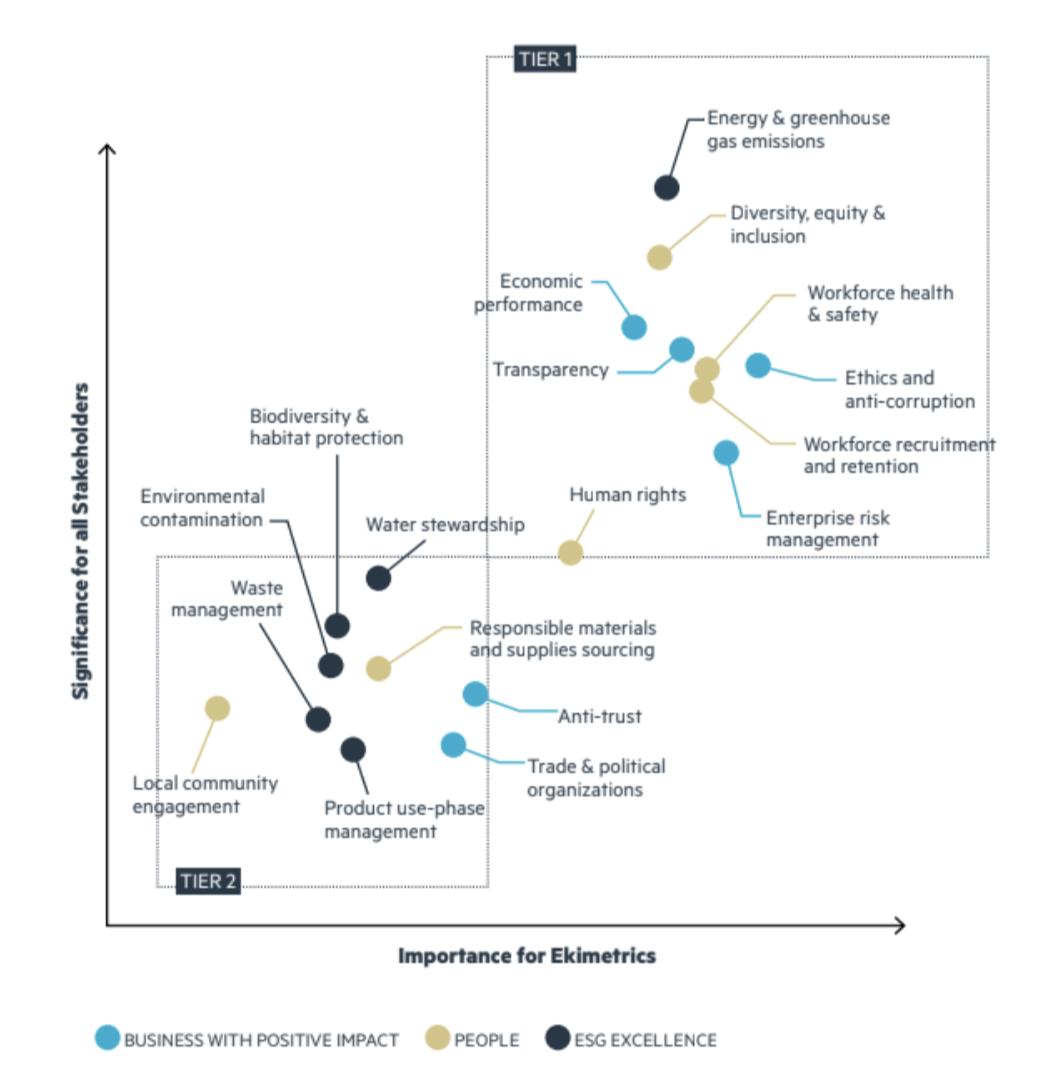
Double Materiality Assessment: Ekimetrics required a full Double Materiality Assessment compliant with the Corporate Sustainability Reporting Directive (CSRD).
Group Policies and Processes: Policies and procedures needed to be aligned with relevant frameworks, standards, and Ekimetrics’ internal sustainability vision.
Carbon Footprint Targets: There was a pressing need to verify carbon reduction measures and align with the Science Based Targets initiative (SBTi).
Communication and Reporting: A gap in sustainability communication and reporting, both internally and externally, hindered progress.
The Solution
We crafted a comprehensive solution focused on aligning Ekimetrics’ sustainability strategy with global standards and creating practical tools to embed sustainability into their operations. The key elements of our approach included:
1. Materiality Assessment
We conducted a full Double Materiality Assessment, engaging with over 200 internal and external references and six key stakeholder groups. This provided a holistic view of the environmental, social, and governance (ESG) risks and opportunities relevant to Ekimetrics and its stakeholders, ensuring alignment with CSRD requirements.
2. Capacity Building and Training
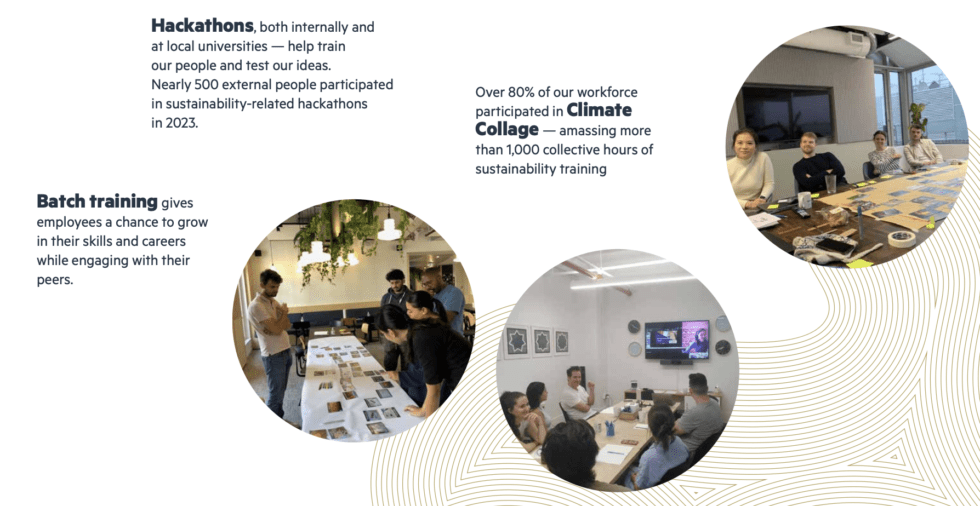
We provided tailored training for Ekimetrics’ Sustainability Team to build internal capabilities, ensuring they had the tools and knowledge to maintain and implement sustainability initiatives long after our engagement concluded.
3. Policy Creation
To ensure a consistent and strategic approach to sustainability, we helped Ekimetrics create three crucial Group Policies:
Sustainability Policy
Supply Chain Code of Conduct
Diversity and Inclusion Policy
These policies set clear expectations for both internal and external stakeholders and serve as foundational documents to drive sustainable practices.
4. Process Design
We designed and implemented two critical processes that integrate sustainability into decision-making:
Client Due Diligence Process: Ensuring that new client engagements align with Ekimetrics’ sustainability values.
Supplier Selection & Screening Process: Developing criteria for selecting suppliers that meet sustainability and ethical standards.
5. Carbon Footprint Reduction & SBTi Validation
We worked with Ekimetrics to design carbon footprint reduction measures, conduct scenario analysis for future reductions, and submit their targets to the SBTi, which were successfully validated. This also included incorporating carbon reduction targets into HR performance bonus models to incentivize progress.
6. Improving the Roadmap for Ecovadis
As part of our long-term impact strategy, we assisted in refining Ekimetrics’ roadmap to enhance their Ecovadis rating, further demonstrating their commitment to continuous improvement in sustainability performance:
Environment: Increase of 30 points
Labour: Increase of 20 points
Ethics: Increase of 10 points
Sustainable Procurement: Increase of 15 points
7. Impact Report (2023)
We supported the creation of Ekimetrics’ 2023 Impact Report, aligning it with the Global Reporting Initiative (GRI) standards to ensure transparency and accountability in their sustainability efforts.
Tangible Results Achieved
By the end of this engagement, Ekimetrics had successfully embedded sustainability into the fabric of their organization through concrete deliverables:
Double Materiality Assessment: A full Double Materiality Assessment involving over 200 references and six stakeholder groups.orporate Sustainability Reporting Directive (CSRD).
Group Policies and Processes: Creation of 3 Group Policies and 2 Group Processes to standardize sustainability practices across the company.
Carbon Footprint Targets: SBTi-validated carbon reduction targets, setting the stage for measurable climate action.
Communication and Reporting: A gap in sustainability communication and reporting, both internally and externally, hindered progress.
EcoVadis Improvement: Significant improvement of their EcoVadis grade (+19 points Overall Score), stimulating the acceleration of the sustainable transformation and securing client partnerships
Better Reporting: Ongoing improvements in sustainability reporting, with a 2023 GRI-aligned Impact Report that highlights their progress.