Client Case
Gaia Labs
Building the concept and modeling the impact of a regenerative ecolodge in Cabo da Roca
CASE STUDY
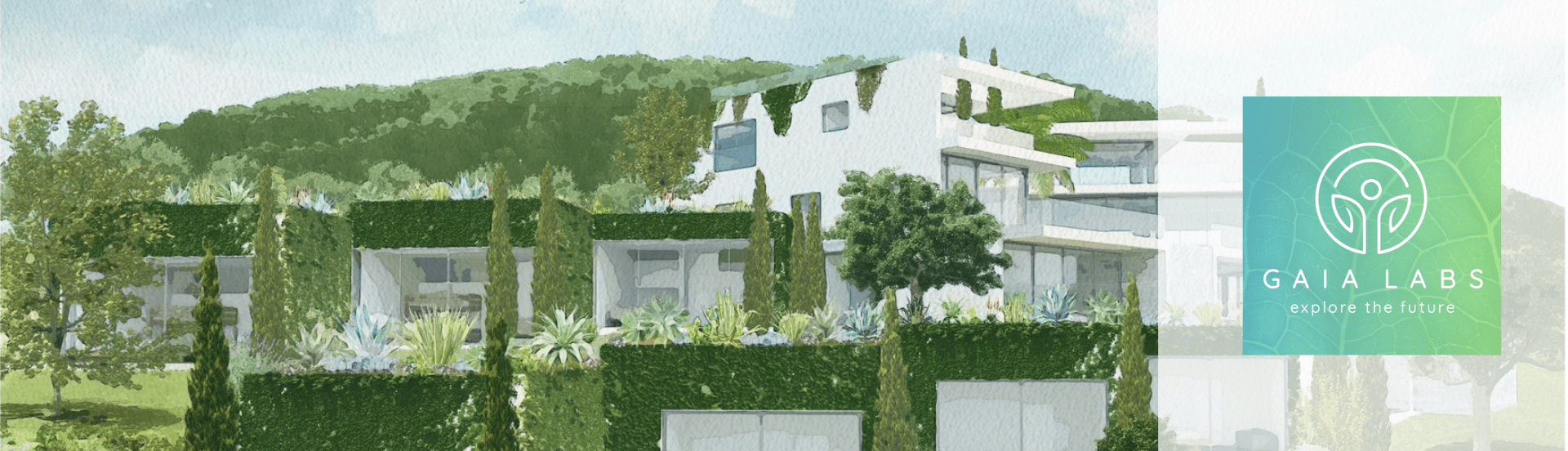
Gaïa Labs will be a fully regenerative ecolodge hosting nature retreats that explore what living sustainably in 2050 looks like, using only the resources of one Earth. Gaïa Labs aims to maximize its future impact across several key areas: carbon, energy, circularity, water, nature positivity, and waste.
Industry
Real Estate, Services
Clients
Location
Portugal
To bring Gaia Lab’s ambitious concept to life and maximize its future impact across key areas, requires a detailed concept, a robust impact model, and a plan to achieve near-total energy autonomy with low investment.
Concept and Impact Model
The solution involved two interconnected projects. First, we helped build the foundational concept and model the impact of the regenerative ecolodge. This included:
- Defining the Concept: We detailed the different aspects of the concept—from edible gardens and agroforestry to circular waste systems—to maximize its impact.
- Modeling Potential: We modeled its potential impact, looking at future energy consumption, solar energy production, and overall autonomy.
- Formalizing the Plan: We selected the right partners and formalized the concept for implementation, funding, and communication.
Energy Independence
Second, we focused on enhancing their energy independence through a solar Power Purchase Agreement (PPA). This involved detailed financial and energy modeling to simulate needs, optimize production capacity with battery storage, and select the best energy management system. Crucially, we negotiated a PPA that requires zero upfront investment from the ecolodge owner.
The impact of this comprehensive planning is a strategy to become a beacon of regenerative living. The ecolodge is designed to be:
- Near Zero Energy, with 90% energy autonomy from batteries and smart monitoring. The innovative PPA ensures 90% energy autonomy is achieved with 0 CAPEX, lower electricity costs, and a smart energy management system that maximizes self-consumption.
- Net Zero Carbon in operation; Circular with zero waste through composting and rainwater reuse;
- Low water consumption through efficient equipment;
- Nature Positive with an edible garden, agroforestry, and partnerships with NGOs.

Simple Consumer Information & Education

Engagement of the End Consumer

Design of Front-end UX at Scale