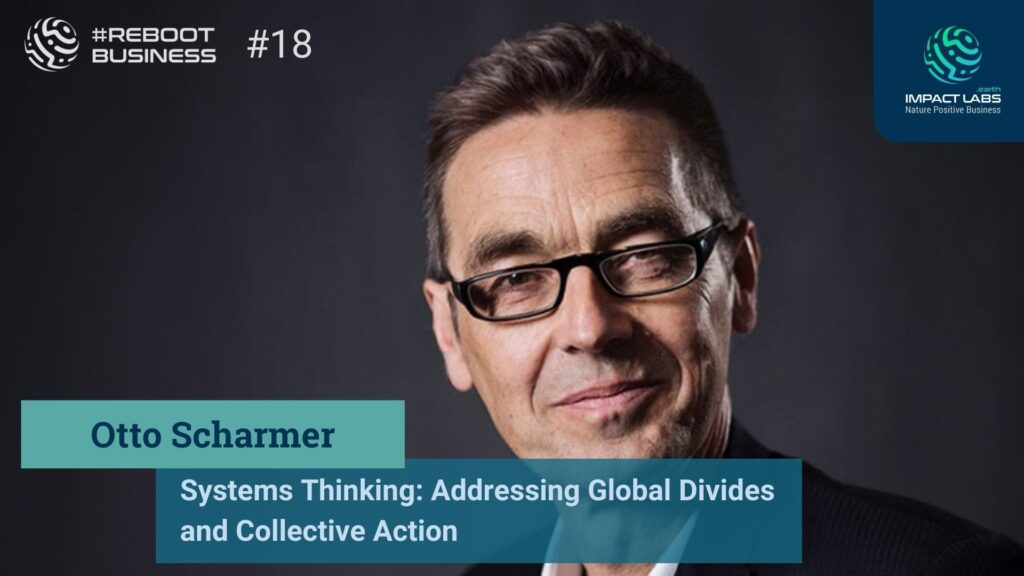
Systems Thinking: Addressing Global Divides and Collective Action
Episode Summary
Julian Devaureix interviews Otto Scharmer, a senior lecturer at MIT and creator of Theory U, about navigating the current radical transformation of the business world due to social, energy, and environmental demands. Scharmer discusses systems thinking as a way to understand interconnected global crises like ecological damage, socioeconomic inequality, and mental health issues, emphasizing that these are symptoms of deeper disconnects.
Scharmer’s Theory U is a framework and set of tools for creating change in organizations and society. It focuses on shifting awareness so that systems can better understand themselves. The key idea is that attention shapes the future, so leaders and individuals can either stay stuck in old reactive habits or move toward creative, purposeful action. Scharmer emphasizes personal awareness, deep listening in small groups, and aligning work with a clear sense of purpose as ways to spark meaningful change, starting with each individual.
What do we talk about?
Episode Timestamps
00:00 Introduction
03:17 Defining Systems Thinking and its Importance
05:50 Limitations of Systems Thinking and the Concept of Social Fields
09:05 Introduction of Theory U as a Process of Transformation
14:30 The Two Main Aspects of Theory U
22:10 Analysis of the Current Age Through Three Divides
26:40 Awareness of Problems Contrasting with Lack of Effective Action and Root Causes
32:10 “The Power of Attention is the Real Superpower of Our Age”
37:45 The Attention Crisis and its Drivers
46:10 Strategies to Address the Attention Crisis and Drive Change
50:00 Where to Start Making a Difference and Identifying Biggest Levers for Change
55:30 Practical Advice for Individuals
01:05:00 The Importance of Listening & Shifting Inner States
You cannot change a system unless you change consciousness, right? So that that means you cannot really change a social system unless you transform or evolve the mindsets of the people who are enacting that system.
Otto Scharmer
Senior lecturer, MIT; Creator of Theory U
Impact
Otto Scharmer’s work has had a major impact by providing a structured way to lead change and spark innovation in complex systems. At the core is “presencing”—tuning into the emerging future by shifting inner awareness. This approach helps people, organizations, and partnerships practice deeper listening, reflection, and co-creation. It has shaped fields like business, leadership, social innovation, and sustainability by moving from reactive problem-solving to creating new solutions together. Through the Presencing Institute, programs like u-lab, and partnerships with groups such as the UN, Scharmer’s work has built a global network of change-makers tackling today’s biggest challenges with shared awareness and collective action.
Listen to Reboot Business on your favourite platform